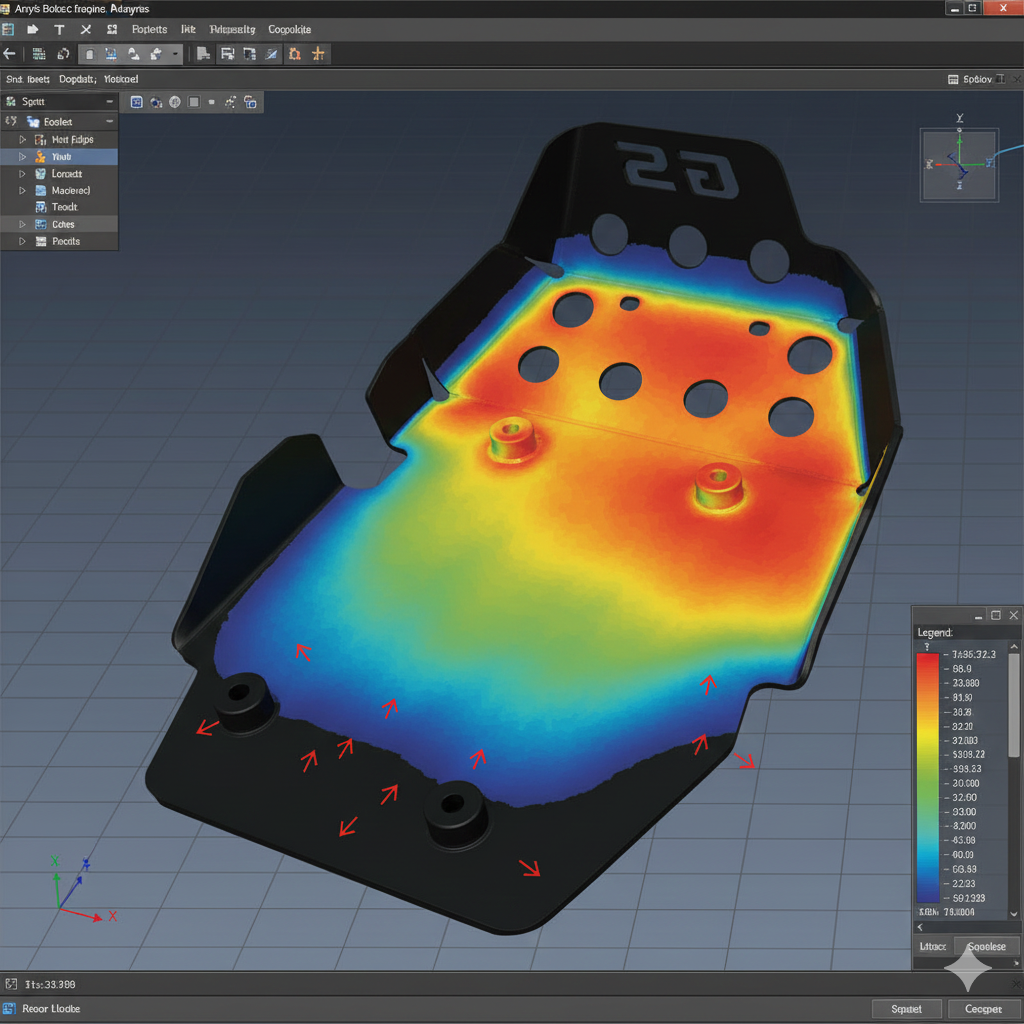
Key Engineering Factors That Define a Good Bash Plate
1. Material Thickness and Grade
Thickness alone does not define strength.
A well-designed bash plate balances material grade, thickness, and forming method.
-
Thin but high-grade material with proper bends can outperform thicker flat plates.
-
Excessively thick plates increase weight and transfer more shock to mounting points.
-
Poor-grade material cracks sooner even if it looks heavy-duty.
What to look for:
Uniform thickness, known alloy grades, and reinforcement where impacts are expected—not random bulk.
2. Mounting Strategy (Frame vs Engine)
This is one of the most critical factors.
-
Frame-mounted bash plates distribute impact loads safely across the chassis.
-
Engine-mounted plates risk transferring shock directly into crankcases and sump bolts.
-
Hybrid mounts must use isolation bushings to allow controlled movement.
Rule of thumb:
A bash plate should protect the engine—not use it as a structural member.
3. Reinforcement Ribs and Bends
Strength in sheet metal comes from geometry, not just material.
-
Pressed ribs increase stiffness without adding weight.
-
Strategic bends deflect impacts and prevent flat-panel deformation.
-
Reinforcements should align with expected strike zones.
Flat plates with no ribs rely purely on thickness—and fail sooner under repeated hits.
4. Impact Load Path
A good bash plate is designed to redirect force, not absorb it at a single point.
-
Impacts should travel from the strike zone → reinforcement → mounting brackets → frame
-
Poor designs concentrate force near mounting holes, leading to cracks or bolt failure
-
Smooth load paths reduce stress on the engine and chassis
This is invisible engineering—but it separates functional protection from cosmetic armor.
5. Coverage Area (Front, Sides, Linkage)
Protection is not just about what you can see.
A proper bash plate should cover:
-
Front-facing exhaust headers
-
Oil filter and sump
-
Lower engine cases
-
Side edges vulnerable during slides
-
Linkage and cross-member areas (where applicable)
Over-coverage adds weight; under-coverage defeats the purpose. Balance matters.
6. Weight vs Strength Balance
Heavier does not mean stronger.
-
Excess weight affects handling and suspension response
-
Poorly designed heavy plates transmit more force during impacts
-
Lightweight designs with smart geometry often perform better long-term
The goal is maximum protection per kilogram, not visual bulk.
7. Service Accessibility
A good bash plate respects maintenance needs.
-
Oil drain and filter access should not require full removal
-
Fastener locations should be reachable without special tools
-
Removal and refit should not disturb alignment
If a bash plate makes routine service difficult, it will eventually be ignored—or removed.